Hike the Inca Trail to Machu Picchu
There's a stone road the Incas carved into these mountains more than five centuries ago, and it still climbs through cloud forest and wind-scoured passes to the Sun Gate. We've split this guide into the two ways to walk it: the short two-day version, or the full four-day classic. Either way, you arrive at Machu Picchu on foot — which, once you've done it, is hard to imagine doing any other way.
An Inca road that still leads to a lost city
What we call "the Inca Trail" today is really just one surviving thread of the Qhapaq Ñan, the road network the Inca empire built to hold Tahuantinsuyo together — moving people, goods, and messages across some genuinely unforgiving terrain. Whoever engineered this section clearly knew the mountains: the path hugs water sources, avoids the worst grades it can, and still, somehow, feels impossibly steep in the moment.
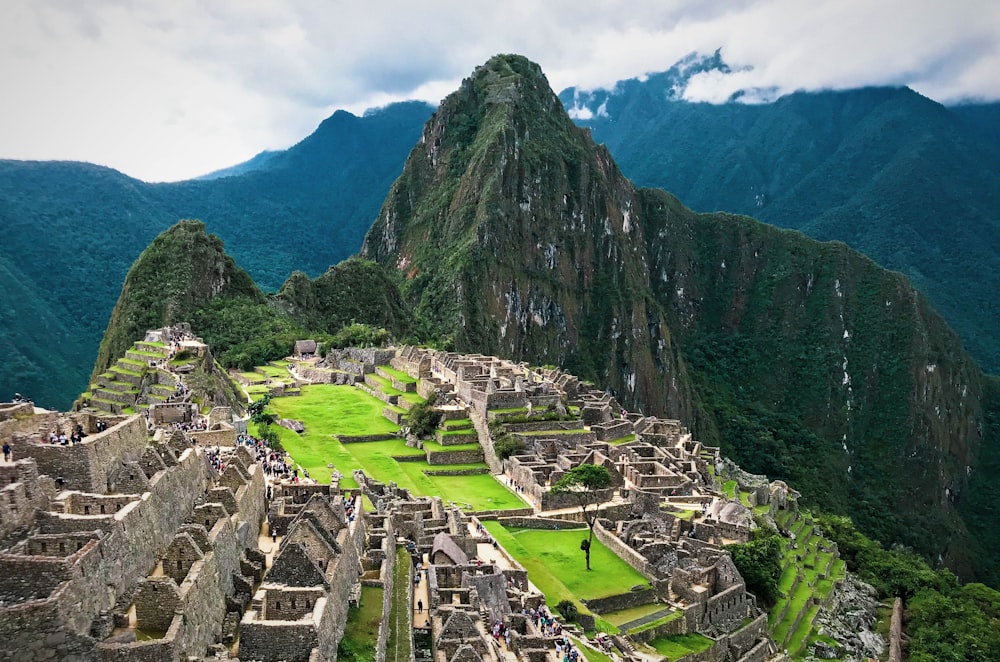
These days the same stone steps carry hikers instead of llama caravans, but you're walking past the same Inca terracing, the same mountain passes, the same cloud forest and ceremonial sites like Wiñay Wayna. Then, at Inti Punku — the Sun Gate — Machu Picchu shows up below you for the first time, and no photo you've seen of it quite prepares you for that moment.
One rule shapes everything about how this trek works: access is limited to protect the ruins, so every hiker needs a permit booked through a licensed Inca Trail operator. There's no walking it on your own, no matter how experienced you are. It's a hassle for planning, sure, but it's also exactly why the Inca Trail still feels quiet and personal in a way the bus route into Machu Picchu simply doesn't.
- Trail network length~60,000 km (Qhapaq Ñan)
- Daily hikers allowed500 (incl. crew)
- Machu Picchu elevation2,430 m / 7,972 ft
- Highest point of the trek4,200 m / 13,780 ft
- Closed for maintenanceEvery February
Inca Trail in 2 Days
Most people know this one as the Short Inca Trail. It picks up around Km 104 and covers the final, most photogenic stretch of the classic route — Wiñay Wayna, the Sun Gate, all of it — but skips the high passes entirely. If you're tight on time, or you just want that postcard arrival at Machu Picchu without committing to four days of camping, this is the route we'd point you toward.
| Stage | Route | Altitude | Distance | Walking time |
|---|---|---|---|---|
| Day 1 | Km 104 → Wiñay Wayna → Inti Punku (Sun Gate) → Machu Picchu Moderate | 2,400 – 2,650 m | 13 km | 6 – 7 hrs |
| Day 2 | Guided Machu Picchu tour & return to Cusco Easy | 2,430 m | — | Half day |
Why hike the 2-day route
- Starts with a train ride to Km 104, then a steady uphill climb through cloud forest — your legs will know it, but it's manageable.
- Visits the same Sun Gate entrance the 4-day trekkers use, so you still arrive at Machu Picchu on foot, not by bus.
- Passes the terraces and temples of Wiñay Wayna, arguably the best-preserved Inca site anywhere on the trail.
- No high-altitude pass, which means a gentler acclimatization curve than the classic route.
- Usually ends with a real bed — one night in a hotel in Aguas Calientes rather than a tent.
Good to know
- Permits for this route are issued separately from the 4-day Inca Trail, and they sell out just as fast during June–September.
- Bring your original passport — the Km 104 checkpoint checks it against your permit, no exceptions.
- Give yourself at least one full day in Cusco (3,400 m) to acclimatize before you start walking.
- The first two to three hours are the steepest part of the whole day, so don't burn yourself out early.
Route map: Km 104 to Machu Picchu
Approximate route — actual trail follows Inca stonework, not roads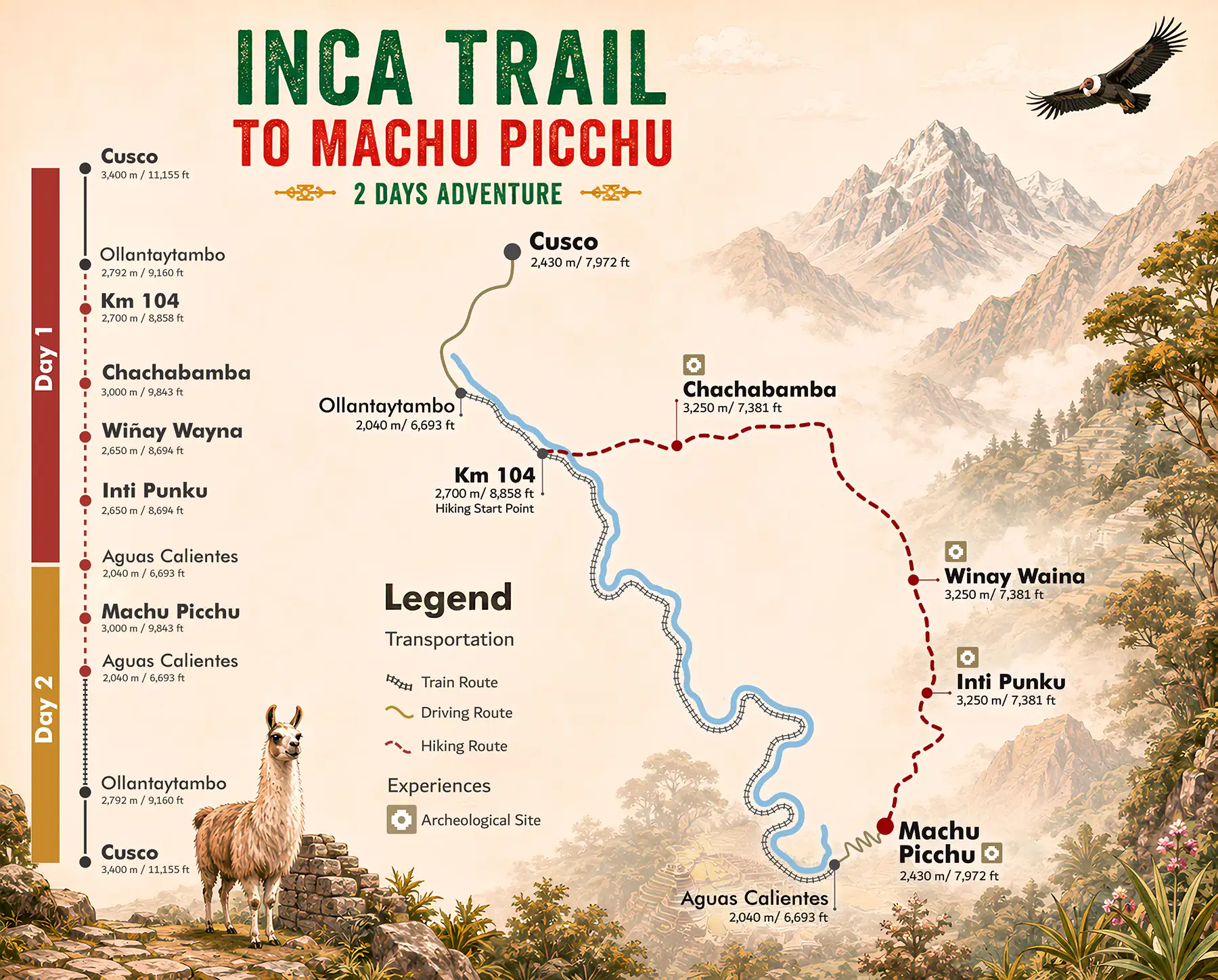
Inca Trail in 4 Days
The Classic Inca Trail runs the full 43 kilometers from Km 82, crossing three mountain passes — including the legendary Dead Woman's Pass at 4,200 m — before dropping down to Machu Picchu through the Sun Gate. Ask anyone who's hiked it and they'll tell you it belongs on the short list of best multi-day treks in South America. Permits are capped at 500 people a day, guides and porters included, so this is not a trek you book on a whim.
| Stage | Route | Max altitude | Distance | Walking time |
|---|---|---|---|---|
| Day 1 | Km 82 → Wayllabamba Easy | 3,000 m | 9 km | 5 – 6 hrs |
| Day 2 | Wayllabamba → Dead Woman's Pass → Pacaymayo Hard | 4,200 m | 12 km | 6 – 7 hrs |
| Day 3 | Pacaymayo → Runkurakay Pass → Phuyupatamarca → Wiñay Wayna Moderate | 4,000 m | 16 km | 7 – 8 hrs |
| Day 4 | Wiñay Wayna → Sun Gate → Machu Picchu Easy | 2,650 m | 6 km | 2 hrs |
Why hike the classic route
- Crosses three passes and strings together a whole chain of Inca sites — Runkurakay, Sayacmarca, Phuyupatamarka, Wiñay Wayna — that the 2-day route simply doesn't reach.
- Day 2, over Dead Woman's Pass, is the hardest day of the trek and, for most hikers we've talked to, the one they remember most vividly.
- Your crew sets up and breaks down camp every day and cooks along the way, so you're free to just focus on walking.
- You reach the Sun Gate right around sunrise on day 4, for that classic first view down over Machu Picchu.
Good to know
- Book 6 to 10 months ahead for a May–September departure; November–April, 2 months is usually enough.
- The trail closes throughout February every year for maintenance and conservation work — no exceptions.
- Spend two or more days in Cusco or the Sacred Valley beforehand to let your body adjust to the altitude.
- Your passport details need to match your permit exactly — checkpoints at Km 82 verify this on-site.
Route map: Km 82 to Machu Picchu
Approximate route — actual trail follows Inca stonework, not roads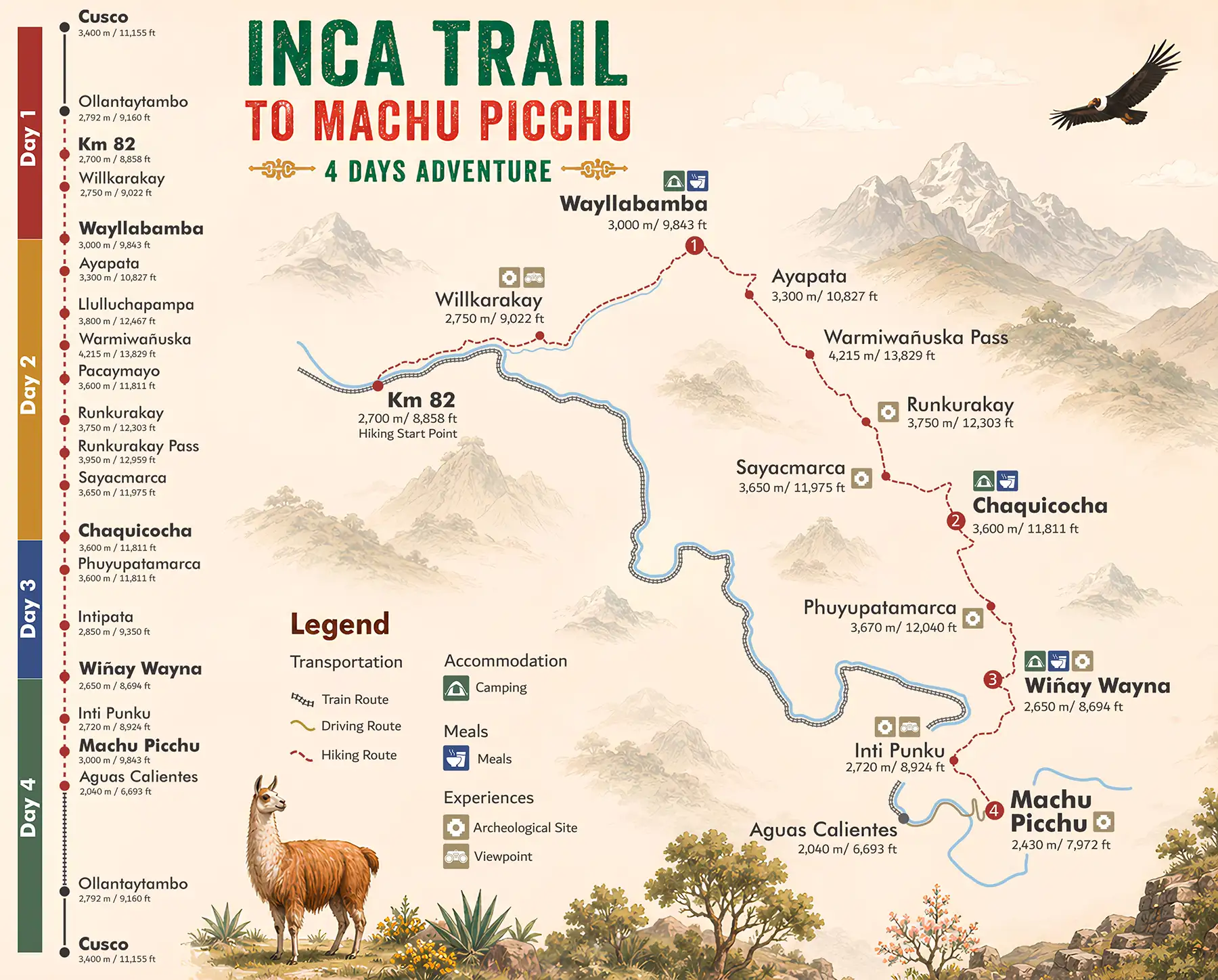
What to pack for the Inca Trail
Days on the trail swing from bright Andean sun to near-freezing camp nights, so layers matter more than any single "best" jacket you could buy. Treat this list as a starting point and adjust it for the season and whichever route you're hiking.
Clothing & layers
- Moisture-wicking t-shirts and a long-sleeve base layer
- Fleece or down mid-layer for cold mornings and camp
- Waterproof, breathable rain jacket and rain cover
- Convertible or quick-dry trekking trousers
- Broken-in hiking boots with ankle support
- Warm hat, sun hat, and gloves for the high passes
- Wool or synthetic hiking socks (bring spares)
Health & altitude
- Original passport (checked at trail control points)
- Personal medication and a basic first-aid kit
- Sunscreen (SPF 50+) and lip balm with SPF
- Insect repellent for the cloud-forest sections
- Water purification tablets or a filter bottle
- Coca leaves or candy, commonly used against altitude
- Trekking poles with rubber tips (protects the stone path)
Gear & extras
- Daypack (30–35 L) with rain cover
- Headlamp with spare batteries
- Reusable water bottle or hydration bladder
- Cash in soles for tips and snacks in Aguas Calientes
- Camera or phone with a spare battery pack
- Sleeping bag liner (if renting gear on the 4-day route)
- Ziplock bags to keep documents and electronics dry
Recommendations before you hike
The decisions that make the biggest difference on the trail usually happen weeks before you even land in Cusco — mostly around altitude, timing, and booking early enough.
Acclimatize in Cusco first
Cusco itself sits at 3,400 m — higher than most of the trail's first day. Spend at least two nights there or in the Sacred Valley before you start, drink more water than feels necessary, and go easy on the pisco.
Book permits early
Only 500 permits go out per day for the classic route, and they move fast. May–September departures need 6 to 10 months' notice; most other months, 1–2 months is fine.
Train your legs beforehand
Regular walking, stair training, or hiking in the months before your trip makes Dead Woman's Pass — and the knee-testing descents after it — a lot more manageable.
Pace day two, especially
The climb to 4,200 m is the hardest stretch of the classic route, full stop. Go slower than feels natural, breathe on purpose, and let your guide set the rhythm.
Pack layers, not bulk
Temperatures swing from warm and sunny to below freezing within the same day. A few thin layers you can add or shed beat one heavy jacket every time.
Travel with a licensed operator
Independent hiking simply isn't allowed on the Inca Trail. Booking with an authorized agency such as Tierras Vivas is what gets your permit, crew, and campsites properly arranged.
What hikers say about the Inca Trail
"Day two over Dead Woman's Pass nearly broke me, but reaching the Sun Gate at sunrise on day four made every step worth it. Our guide paced the group perfectly."
"We only had two days in Cusco, so the short route was perfect — still walked through the Sun Gate on foot and it felt just as special as I'd hoped."
"Spending two extra nights in Cusco before starting made a real difference with the altitude. Wish I'd packed warmer gloves for camp at Pacaymayo."
"Wiñay Wayna alone is worth the hike. Fewer crowds than the bus route into Machu Picchu, and the ruins along the way are incredible."
"Booked eight months ahead for a July departure and it still felt tight — permits really do sell out. Worth the planning though."
"Trekking poles saved my knees on the stone steps down to Machu Picchu. Small thing, made a big difference by day three."
A look at the trail
A few sample shots to give you a feel for the terrain and the mood along the way — swap these placeholders for your own trip photography before publishing.
Inca Trail FAQ
The questions we hear most often while people are still deciding which route to book.
Can I hike the Inca Trail without a guide?
No. To protect the ruins, every hiker has to book through a licensed tour operator — independent hiking isn't permitted on either the 2-day or 4-day route.
How far in advance should I book?
For a May–September departure on the classic 4-day trek, book 6 to 10 months out — only 500 permits are issued per day and they go quickly. Outside that window, 1–2 months is usually enough.
Is the 2-day or 4-day route harder?
The 4-day classic is significantly harder, crossing three mountain passes including Dead Woman's Pass at 4,200 m. The 2-day route skips the high passes for a steadier, more moderate climb.
When is the Inca Trail closed?
The whole trail network closes every February for maintenance and conservation work, so no departures run that month regardless of which route you pick.
Walk the road the Incas built
Whether you have two days or four, permits move fast — start planning your Inca Trail hike to Machu Picchu today.
Departures operated by Tierras Vivas, a licensed Inca Trail agency in Cusco.